

Key Takeaways
- Waterfalls in Khao Sok fall into two main groups: those reached on foot from trails near the visitor center, and those visited by long-tail boat on Cheow Lan Lake.
- Mae Yai is the only waterfall in Khao Sok reachable directly from the road, while most others need a walk through the rainforest, from short strolls to full-day hikes of up to 9 km one way.
- The rainy season from May to October brings the strongest flows, while the dry season from November to April offers easier footing and clearer skies.
- Several jungle trails are officially closed each year from June 1 to December 14 for safety, so checking conditions in advance matters.
- For the deeper waterfalls, a licensed local guide is recommended due to wet rock, river crossings, and unmarked terrain in parts of the park.
A waterfall in Khao Sok can mean very different things depending on which one you choose. Some are a quick roadside stop you reach in minutes, while others sit deep in the jungle and ask for a half-day walk to get there. Knowing the difference ahead of time shapes how you plan your day. The park’s falls split roughly into two groups: those reached on foot from the trails near the visitor center, and those visited by long-tail boat on Cheow Lan Lake. Each has its own character, and the best fit depends on your fitness, your time, and the season you are visiting.
The Easy-to-Reach Trail Falls
For travelers who want a taste of Khao Sok’s waterfalls without committing to a long hike, three options stand out near the entrance area:
- Mae Yai Waterfall is the simplest of all, a roughly 30-meter single-tier fall along Highway 401 at kilometer 113, around 5.5 km from the park headquarters. It is the only waterfall in Khao Sok reachable directly from the road, making it a reliable year-round stop.
- Wing Hin Waterfall sits about 2.8 km from the visitor center along the main trail. It stands out for its broad, flat rock formations and gentle flow, an easy and calm place to pause and cool off mid-walk.
- Bang Hua Rat Waterfall is around 4.5 km from the headquarters, a moderately flat walk along the river through tall trees and bamboo. The wide, curtain-like cascade spills into a clear pool that suits a swim and a picnic.
The Demanding Falls Deeper in the Jungle
For travelers willing to put in the steps, the deeper waterfalls in Khao Sok National Park reward the effort with quieter scenery and stronger cascades:
- Than Sawan Waterfall, also called “Heavenly Falls,” sits roughly 6 km from the park headquarters and stands around 70 meters tall. The final stretch involves wading along a riverbed, which is why this route is best attempted only in the drier months.
- Ton Kloi Waterfall is a single-tiered fall about 7 to 9 km from the park headquarters at the end of the Western Track, also known as Route 1. It is a full-day walk that rewards trekkers with a quiet pool and a stony bank suited to a long rest.
- Sip Et Chan Waterfall is the toughest of the group, named for its eleven cascading tiers. The hike climbs steeply along the Bang Laen River and crosses several streams, taking most groups around four to five hours of walking time. It is best suited to confident trekkers comfortable with rough, root-strewn terrain.
The Waterfall on Cheow Lan Lake
The standout among the waterfalls in Khao Sok Cheow Lan Lake area is Bang Hoi Waterfall, also known as Nam Tok Cheow Lan. It is one of the few waterfalls in the park reachable straight from the lake itself.
Getting to Bang Hoi is part of the appeal. From the Cheow Lan Dam pier, also called Ratchaprapha Pier, travelers board a long-tail boat for a scenic ride across the lake, passing limestone karst formations rising directly out of the emerald water. You’ll arrive by boat at a drop-off point close to the falls. From there, a 200-meter jungle path will take you to your destination. This section is suitable for most people, regardless of age or fitness, since the boat covers most of the distance.
Once you arrive, the cascade flows gently over rocks into a cool, clear pool surrounded by dense rainforest and towering limestone cliffs. There is time built into most boat tours for photos, a swim, and a stretch of the legs before heading back to the pier. Bang Hoi is typically visited as part of a Cheow Lan Lake day trip or overnight tour, rather than as a standalone destination.
The Best Time to See the Falls
The look and feel of each waterfall changes significantly with the season:
- Rainy season (May to October): the falls run fullest, with strong flows, dramatic cascades, and the greenest forest around them. Trails can be slippery, and some routes including Than Sawan and Ton Kloi are officially closed from June 1 to December 14 for safety.
- Dry season (November to April): easier footing and clearer skies, with most trails open and accessible. Water levels can drop noticeably at the peak of the dry months, especially March and April.
- For powerful falls, visit during or just after the wet months when the rivers are still high.
- For comfortable walking, choose the drier stretch from December through April when paths are firm and conditions are predictable.
Reaching the Jungle Falls With a Guide
Trail falls present a wide range of lengths and difficulties. Having a guide familiar with the day’s conditions makes the more challenging routes considerably simpler. Trekking alone becomes genuinely risky due to factors like wet rocks after rain, river crossings that vary with water levels, and trail markers that disappear fast in the rainforest. Several of the shorter routes near the visitor center can be walked on your own, but the deeper and more remote trails such as Than Sawan and the upper reaches of Sip Et Chan are best done with a licensed local guide.
A guide handles the route choices, reads the trail conditions, and lets you focus on the scenery rather than the navigation. The right guide can also adjust the route on the day if the weather changes or if your group’s pace asks for a different stop along the way.
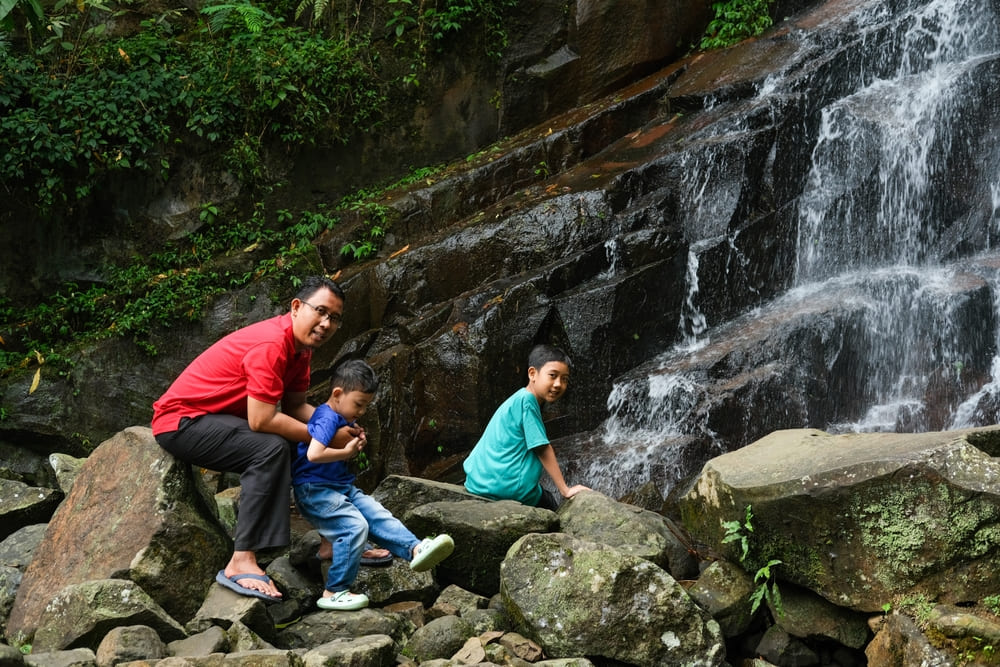
Plan Around the Right Falls for Your Visit
Khao Sok’s waterfalls range from a quick roadside stop at Mae Yai to a full day on the trail at Sip Et Chan or Ton Kloi, with Bang Hoi sitting in its own category on the lake. There is one to suit almost any traveler, whether you are passing through for an afternoon or settling in for several days. For the trail falls, the simplest way to plan is around your time and fitness rather than the falls themselves.
Khao Sok Jungle Hostel offers jungle trekking trips in Khao Sok as both half-day and full-day options, with routes matched to every level. The local team manages bookings, ensuring simple logistics upon arrival. This offers the most direct route to having a waterfall day on your schedule.
References:
- Khao Sok National Park. Retrieved 11 June 2026, from https://en.wikivoyage.org/wiki/Khao_Sok_National_Park
Frequently Asked Questions About Waterfalls in Khao Sok
Q: What are the best waterfalls in Khao Sok National Park for first-time visitors?
A: First-time visitors with limited time tend to enjoy Mae Yai, the only waterfall in Khao Sok reachable directly from the road. For those open to a short walk, Wing Hin and Bang Hua Rat are both rewarding without being overly demanding. Confident trekkers willing to spend a full day in the jungle often head for Ton Kloi or the eleven-tier Sip Et Chan.
Q: Which waterfalls accessible from Cheow Lan Lake are worth visiting?
A: The standout is Bang Hoi Waterfall, also called Nam Tok Cheow Lan. It is reached by long-tail boat from Ratchaprapha Pier followed by a short jungle walk of around 200 meters. Bang Hoi is typically included as a stop on Cheow Lan Lake boat tours and offers a peaceful cascade with pools suited to swimming. The combination of a scenic lake ride and an easy walk makes it accessible to most travelers.
Q: When is the best time to visit Khao Sok waterfalls?
A: The rainy season from May to October produces the strongest flows and the most dramatic cascades, though some trails such as Than Sawan and Ton Kloi are officially closed from June 1 to December 14 for safety. The dry season from November to April offers easier footing and clearer skies, with most trails open. For the best balance of strong water flow and open trails, mid-December through January, when trails have just reopened and the rivers are still high, and May, before the closure period begins, are often the sweet spots.